Key Insights
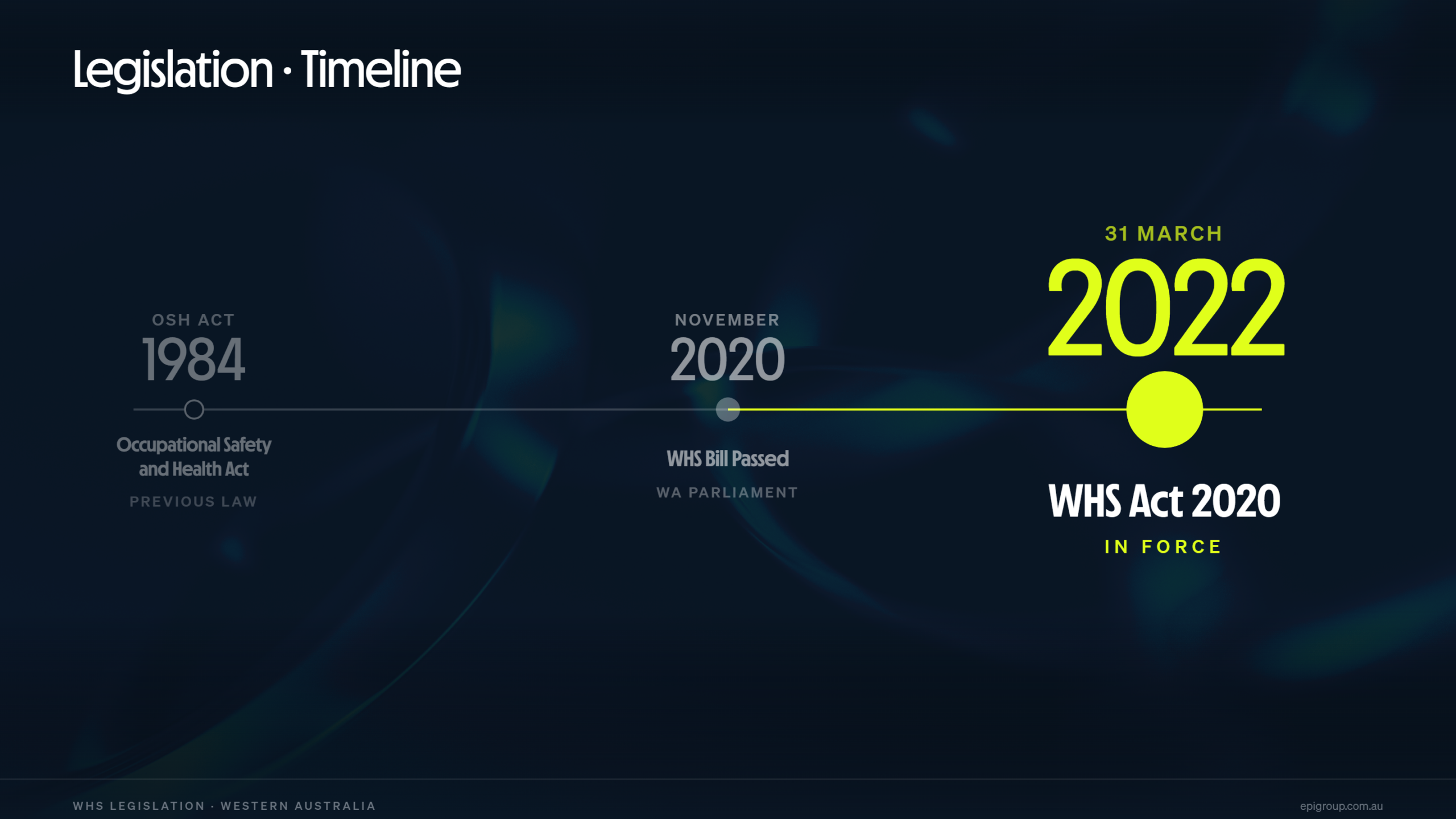
- The Work Health and Safety Act 2020 (WA) has been in force since 31 March 2022, replacing the Occupational Safety and Health Act 1984.
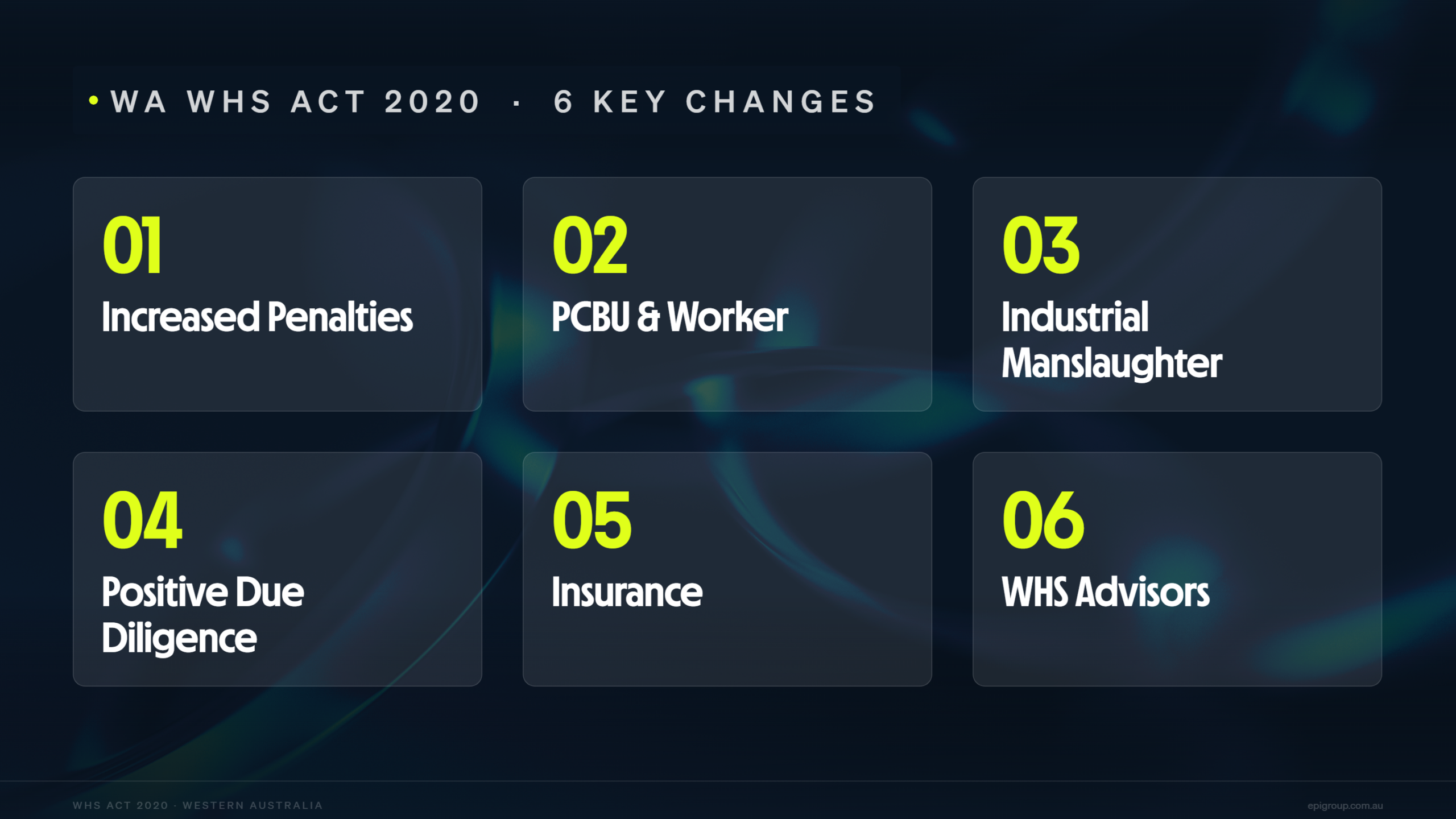
- The Act introduced six key changes: higher penalties, the broader PCBU and worker definitions, industrial manslaughter offences, positive due diligence for company officers, restrictions on insuring against fines, and new duties for WHS advisors.
- Industrial manslaughter in WA now carries maximum penalties of a $5 million fine and 20 years in prison for individuals, and a $10 million fine for companies.
- PCBUs must meet obligations to ensure the health and safety of their workers and others like visitors and volunteers. Just because you don’t directly employ a person working in your business, doesn’t mean you’re safe from prosecution.
- Prosecutors no longer have to convict the company to prosecute a company officer. Company officers can be prosecuted for failing their due diligence duties even if no accident or incident has occurred.
- External WHS advisors can be prosecuted in the same way as a business owner.
- You can still get insurance to pay for your legal fees, but if you’re personally prosecuted, the dollar figure has to come from your own pocket.
On Tuesday 3rd November 2020, workplace health and safety laws in Western Australia made their biggest jump in decades. On this day, Parliament passed the Work Health and Safety Bill 2019, meaning WHS was about to change for businesses, employers and employees throughout WA. The Bill became the Work Health and Safety Act 2020 (WA), which came into effect alongside its supporting regulations on 31 March 2022. This legislation is now the law in WA, and it may have changed how you do business.
We’ve broken down six key changes so you can understand what this all means for you and your organisation, and how you can stay compliant.
What is the Work Health and Safety Act 2020 (WA)?
The WA Work Health and Safety Act 2020 (WHS Act) is the first major overhaul of Western Australia’s WHS laws for over 30 years.
The new laws are intended to improve the protection of workers by factoring in modern employment agreements, higher penalties for companies and individuals, and introducing the term ‘person conducting a business or undertaking’ (PCBU).
For our friends outside of WA, this is familiar territory. This Act harmonised WA with Australia’s other States and Territories (excluding Victoria) and replaced:
- The former Occupational Safety and Health Act 1984
- WHS elements of the Mines Safety and Inspection Act 1994
- WHS elements of the Petroleum and Geothermal Energy Safety Levies Act 2011
Who is Affected by the WHS Act?
The short answer is everyone. This single Act now covers all aspects of safety in every WA workplace.
The long answer is mainly small and medium businesses, because the penalties are high enough to bankrupt them and it is now easier to prosecute individuals. But more on this later.
What are the Major Changes of WA’s WHS Act?
In December 2020 we hosted an event with renowned WHS lawyer from Jackson McDonald (previously Wayland Legal), Greg Smith.
Greg has specialised in employment law and WHS for over 20 years. He’s also contributed to several safety publications and has worked as the Principal Safety Advisor for a major oil and gas company.
He walked us through the six changes that have had the largest impact on businesses.
1. Increased Penalties
Yes, that’s right, all penalties increased.
But the most significant in the entire legislation is the gross negligence/industrial manslaughter penalty. Under the former OSH Act, the maximum penalty for a company was $2.7 million. Under the WHS Act this jumped to $10 million.
Penalties are just as detrimental for individuals. If you’re found guilty of industrial manslaughter in WA, you previously faced a maximum fine of $550,000 plus five years in prison. Under the WHS Act, you can be hit with a $5 million fine and up to 20 years in prison.
Just in case the penalties weren’t terrifying enough, if you’re charged as an individual the funds have to come out of your own pocket, not your company’s.
2. PCBU & Worker
PCBU was introduced to WA’s WHS laws by the Act and stands for Person Conducting a Business or Undertaking. This is a fairly broad term used throughout WHS legislation to describe all forms of modern working arrangements.
As well as an employer, a PCBU can be a:
- Corporation
- Association
- Partnership
- Sole trader
- Volunteer organisation that employs people to carry out work
- Local government council
- Independent school
- Government department and authorities
PCBUs must meet obligations to ensure the health and safety of their workers and others like visitors and volunteers.
Speaking of workers, the term “worker” is also broader under the WHS Act, and includes:
- An employee
- Subcontractors and casual workers
- Employee of a contractor or subcontractor
- Employee of a labour hire company
- Outworker
- Apprentice or trainee
- Volunteer
- Student on work experience
PCBUs have the equal duty of care to a worker, even if there are multiple PCBUs involved. For example, if you employ a contractor who brings in a labour hire worker, you, the contractor and the labour hire company all share the same duty of care to that labour hire worker. So if an incident occurs, you can all be prosecuted under the WA WHS Act.
3. Industrial Manslaughter
This is the one that everyone is talking about.
As you know, penalties for industrial manslaughter increased under the WA WHS Act, but there’s more.
The criteria for convicting someone for industrial manslaughter under the WHS Act is the same as convicting someone under the former gross negligence law. But the WHS Act states that prosecutors no longer have to convict the company to be able to convict individual company officers. More on that below.
The industrial manslaughter provisions came into effect in WA in 2004. Between then and our December 2020 event, there had been 421 workplace fatalities in WA and one completed gross negligence prosecution, which happened near the end of 2020.
“I’m not sure what the compelling need is to shift to $10 million fines, because we haven’t actually tested the fines we currently have,” says Greg.
4. Positive due diligence
“There is absolutely no doubt that health and safety legislation is substantially prejudiced against small businesses,” says Greg.
“Every single company officer who has ever been prosecuted under health and safety legislation in Australia – ever – has been a small business owner, a working director with day-to-day involvement in the business.”
This new legislation has made it administratively easier to prosecute company officers. Most companies go into liquidation when faced with a WHS prosecution. Under the former laws, if your company went into liquidation it couldn’t be prosecuted. This meant the WA Supreme Court had to get your company reinstated in order to prosecute the company officer.
However, under the WHS Act the company doesn’t have to be convicted of an offence to be prosecuted. There doesn’t even have to be an accident or an incident. If you as a company officer have shown you have not met your obligations of due diligence, you can be prosecuted.
5. Insurance
Previously, if you were prosecuted under the former OSH Act, your insurance could pay for your legal fees and your penalties.
Under the WHS Act, your insurance can still pay for your legal fees, but when it comes to paying the penalty, company officers and PCBUs cannot take out insurance to cover fines for breaches. Companies cannot indemnify employees, so if you’re handed a penalty, you’re on your own.
6. WHS Advisors
There is a new section in the WHS Act specifically for external WHS advisors (like us). If an external WHS advisor gives advice about health and safety in your business, we have to ensure that our advice doesn’t create hazards in your business.
If hazards are created as a result of poor advice, advisors can be sued for negligence, sued under public liability insurance and prosecuted.
“But it is not a defence to say: I got bad advice,” says Greg. As an employee or business owner, you cannot simply point the finger at your safety advisor and get off with a slap on the wrist if an incident occurs.
How to Comply with the WA WHS Act 2020: 3 Steps
When the changes first arrived, they felt like an overhyped storm. People closed the shutters, brought everything inside and braced themselves for the impact.
But now the clouds have broken, the sun has come out and things look pretty much the same apart from a few fallen branches.
So here’s how to prevent those branches from falling, so you can maintain business as usual.
1. Communicate the WHS Act changes to key stakeholders
Now that you know what the Act requires, it’s imperative you get key stakeholders up to speed with the changes. These key stakeholders can be your boots on the ground or your leadership team.
If you need help communicating them, Greg can assist here and answer any questions you or your team may have.
Once everyone understands how the changes are going to affect processes, it’s time to get to work.
2. Conduct an audit of your business against the legislation
‘I didn’t know’ won’t save you in court, so make sure your workplace health and safety is up to scratch by conducting an internal audit.
“The biggest source of legal liability for most organisations when it comes to health and safety prosecution are your own documents; because you have all this paperwork that says you’re going to do all this stuff and it’s not what you do in practice,” says Greg. “And if you don’t do it in practice you will be convicted on the basis of your documents.”
Audit your business against the Work Health and Safety Act 2020 and its regulations. Update your outdated documents, interview staff about current processes, assess your equipment, and, most importantly, document the results.
If you need a hand with an audit, here’s How to Conduct a WHS Audit in 6 Steps (with a free template). If you don’t have time to conduct an audit yourself, get in touch to have a chat with our WHS consultants.
3. Create an action plan
Conducting an audit, writing a report and filing it away won’t do yourself, your business or your team mates any good unless actions come from it.
Once you’ve identified the positives, negatives and any gaps in your processes, communicate your findings with key stakeholders. Then create 90-day action plans to get the wheels in motion.
Don’t forget that help is at hand. Contact us if you need any help, or sign up to our newsletter via the footer if you’d like to hear about our future events. For WHS legal advice, reach out to Greg at Jackson McDonald, he’ll be happy to help.
Finally, try not to be overwhelmed by a shift in legislation. Yes, the changes were daunting, but it’s never too late to dust off your documents, refresh your processes, and get your ducks in a line.
Put Your Knowledge to the Test with our WA WHS Act Online Courses
Staying Compliant with the WA WHS Act 2020
The Work Health and Safety Act 2020 changed the ground rules for every WA business: higher penalties, broader duties and personal accountability for company officers. The good news is that compliance comes down to the same fundamentals: know your duties, audit your practices against the legislation, and act on what you find. If you’d like expert support at any step, our team is ready to help.